 HOA Lawyer Blog


 In the State of California, most HOA’s are non-profit corporations managed by a board of directors composed of volunteer homeowners elected by the membership. Boards derive their authority from the governing documents including the Articles of Incorporation, Bylaws, and Covenants, Conditions, and Restrictions (CC&Rs) that impose rules and restrictions on the use of property within the development. The board of directors, acting on behalf of the HOA, is responsible for the maintenance of the common areas of the property, enforcing the governing documents, and collecting assessments. While most boards delegate duties to management companies and rely on experts such as attorneys and CPA’s to aid in decision-making, the board is ultimately responsible for decisions and actions taken by the HOA.
HOA board members are not compensated for their services and are typically not experts or even very familiar with the strict requirements for HOA management. While new directors typically run with an altruistic motive to help their communities and “get things done,” it is important that they understand the structure of a community association, the association’s authority over the development and its owners, and the unique way an association is governed. Board education is a great way to familiarize new members with an overview of their duties and responsibilities and to provide a refresher for existing Board members so that the HOA runs smoothly, efficiently, and with minimal exposure to liability. Board education can also help protect directors for incurring personal liability for decisions made in the scope of their duties.
Board education is offered by management companies, law firms, CAI chapters, and others with expertise and knowledge in HOA governance. There is no one-size-fits-all educational program as the issues faced by HOA’s are often unique to each association. Some general topics for Board education include but are not limited to:
- General Duties and Responsibilities of Directors
- Laws Applicable to Common Interest Developments
- Types and Hierarchy of Governing Documents
- Business Judgment Rule
- Conducting Meetings
- Enforcement and Disciplinary Matters
- Financial Responsibilities
- Maintenance Responsibilities
- Assessments & Collection
- Director Conduct
- Contracts
 |
An educated board oftentimes results in a better-functioning HOA with less legal fees, less special assessments, less contentiousness, and higher property values. Board members who are willing to put personal differences and agendas aside, are open to considering expert advice and differing viewpoints, and who work collaboratively with other directors and in the best interests of the Association as a whole, are the directors who best serve their communities. While directors will always be subject to criticism since it is impossible to please everyone, with proper education, those directors’ actions will better withstand such scrutiny. |
-Blog post authored by TLG Attorney, Carrie N. Heieck, Esq.
 It’s our privilege to welcome Pinnacle at Dublin Ranch Subassociation to Tinnelly Law Group’s growing family of HOA clients.
 It’s our privilege to welcome Broadmoor Northridge Community Association to Tinnelly Law Group’s growing family of HOA clients.
 Since COVID-19, followers of the real estate market may have noticed that the housing market is currently booming. There are not as many sellers as there are buyers, so the competition to obtain a buyer’s dream home is through the roof. Many of these potential buyers are looking to buy their next home within a community association (“HOA”). The competition to buy homes creates an increase in the number of questions from real estate agents and mortgage/escrow companies that are directed toward the association and its agents regarding any litigation involving the association. What should the Board and manager be aware of? What should they do in certain situations?
 It’s our privilege to welcome Canyon Crest Estates Homeowners Association to Tinnelly Law Group’s growing family of HOA clients.
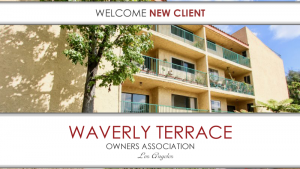 It’s our privilege to welcome Waverly Terrace Owners Association to Tinnelly Law Group’s growing family of HOA clients.
 There will come a time when a homeowner violates an association’s
 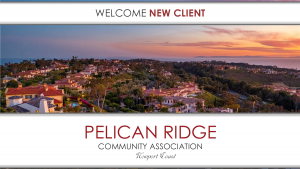 It’s our privilege to welcome Pelican Ridge Community Association to Tinnelly Law Group’s growing family of HOA clients.
 It’s our privilege to welcome Links Pointe Homeowners Association to Tinnelly Law Group’s growing family of HOA clients.
 When a delinquent homeowner dies, there is a strict one-year statute of limitations to sue them or to continue a lawsuit against their estate. (Cal. Code Civ. Proc. § 366.2). This is true even if the statute of limitations would have been longer had the person survived. This harsh rule applies even if you did not know that the person died so Boards and management should take notice if a homeowner does not respond to communications or suddenly falls in arrears and then investigate further by contacting family members or emergency contacts during circumstances of non-responsiveness and/or extended non-payment.