 HOA Lawyer Blog


*Asked & Answered
Asked – Our Association’s By-laws state that you must be an owner of the Association to be eligible for election to the Board. Would the registered domestic partner of the person on title be considered an owner in the State of California under California Community Property Law?
Answered – Not in this instance. Most Association Governing Documents require that anyone wishing to serve on the Association’s Board of Directors be a “member” of the Association. Pursuant to California Civil Code Section 1358, “membership” within an Association is granted by virtue of a person’s ownership interest in the Association. Thus, so long as a person is an owner of a unit within the Association, they are granted membership rights.
Proof of one’s ownership interest in the Association is established through a deed which has been recorded in the Association’s County Recorder’s Office. The persons whose names are listed on the recorded deed are considered to be the “Owners of Record.”
 |
Virtually every Association requires that a member be an “Owner of Record” in order to be eligible to serve on the Board of Directors. Therefore, a registered domestic partner who is not an “Owner of Record” would not satisfy this requirement. To resolve this issue, the domestic partner must be named on the recorded deed to the property. California Community Property law does not render spouses or domestic partners “Owners of Record” for such purposes if their names do not appear on the recorded deed. |
To submit questions to Tinnelly Law Group, click here.
 The recent, unpublished opinion in
  A new subsidiary of a national asset management firm has been founded to help resolve some of the problems experienced by Homeowners Associations (“HOAs”) and the mortgage industry in the resale of foreclosed and defaulting residential properties. A
  The increase in assessment collection efforts by Homeowners Associations (“HOAs”) is being seen nation-wide. States like California, Nevada and Texas are currently debating new legislation aimed at making some drastic, and potentially harmful, reforms to the ways in which HOAs can pursue and collect delinquent assessments.
 Associations are required to levy regular and special assessments sufficient to perform their obligations under their governing documents and
 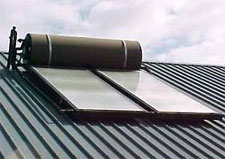 More and more Associations throughout California are considering the implementation of alternative energy sources as a mechanism to reduce their operating expenses. An Association in San Jose will begin construction on the largest solar water heating project in the state later this month in an effort to reduce its water heating bills.

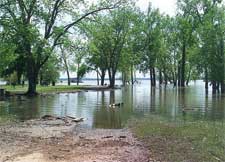 Property owners in a partially-built Northern California subdivision may be compensated by the State for flooding damage to their properties.
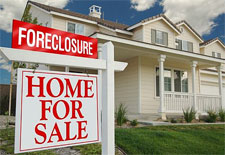 In an effort to collect unpaid assessments, Associations have the power pursuant to